
TV Wall Studio Design Guide
How to Choose Materials for a TV Wall
A practical comparison of wood slats, shiplap, stone, brick and smooth millwork—plus the questions that help a finish feel right in your room.
Begin with the room
The best sample is not always the best wall
A finish that looks impressive by itself can feel too busy, too dark or too cold once it covers a full elevation. Material selection should account for the room’s daylight, flooring, furniture, ceiling height, fireplace, television and the amount of visual texture already present.
Start by deciding whether the wall should quietly support the room or become its dominant architectural feature. That single choice helps narrow color, texture and contrast.
Reviewed by TV Wall Studio Florida design & build team
Five useful directions
What each material contributes to the composition
Wood Slats
Best for: warmth, rhythm and contemporary contrast. Slats can visually raise a wall and work especially well as a controlled accent rather than covering every surface.
Shiplap
Best for: clean horizontal structure and a painted architectural finish. White feels relaxed and bright; deep colors help visually absorb a television.
Natural-Look Stone
Best for: depth, permanence and fireplace emphasis. Scale, joint pattern and color variation should be reviewed across the full wall.
Brick Texture
Best for: character and a slightly more casual or transitional room. Painted brick can add texture without introducing another strong color.
Smooth Millwork
Best for: precise geometry, panel details and a tailored built-in appearance. It integrates easily with cabinetry, crown molding and painted shelving.
Mixed Materials
Best for: creating hierarchy. Use one primary finish and one supporting accent so the television, fireplace and storage do not compete.

Drawing to built result
A material choice must work across the complete elevation
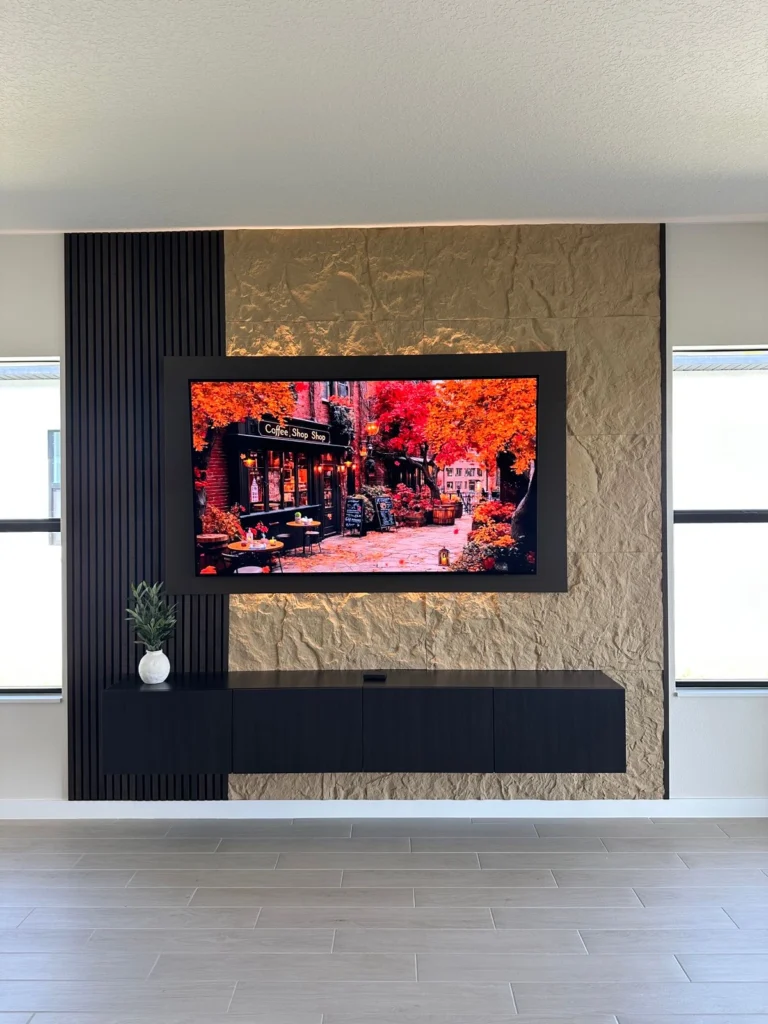
The drawing separates each finish zone; the completed project shows how texture, matte black surfaces and warm light behave together at room scale.

Use these filters
Six questions before choosing a finish
How Bright Is the Room?
Dark finishes can be dramatic in strong daylight but may need warm accent lighting in a shaded room.
How Much Texture Exists?
Busy flooring, patterned furniture and strong ceiling details often benefit from a quieter wall surface.
Is There a Fireplace?
The finish must coordinate visually with the firebox and follow the applicable product clearances and installation requirements.
What Requires Cleaning?
Consider dust, fingerprints, ledges and the practicality of reaching textured or illuminated surfaces.
What Should Feel Permanent?
Cabinetry and stone carry more visual permanence; paint colors and styling elements are easier to change later.
Where Will Light Land?
Grazing light exaggerates texture. Test the proposed lighting direction before finalizing a strongly dimensional surface.
A reliable composition rule
Choose one lead material and let the others support it
If stone is the focal material, cabinetry and paint can remain quiet. If wood slats create the rhythm, the fireplace surface may work better as a calm background. Repeating a floor or furniture tone once on the wall often makes the design feel connected without matching everything exactly.
Next: choose the complete wall conceptMaterial-selection checklist
Bring these five things to the design conversation
Room Photo
Include the entire wall, adjacent corners, floor and nearby furniture.
Finish References
Share flooring, cabinet, furniture and paint colors already staying in the room.
Day & Night Views
Show natural-light conditions and how the room is typically illuminated after sunset.
Two Preferred Examples
Select a small number of projects and identify exactly which material relationship you like.
Need help narrowing the finish?
Share the room—not only the inspiration image
Send a straight-on wall photo, approximate measurements and two material directions you like. We’ll help identify what suits the complete room.