
Lighting & Atmosphere
TV Wall Lighting Guide: How to Plan a Custom Feature Wall
This TV wall lighting guide explains how to layer light around the television, fireplace, shelves and materials for a wall that feels composed by day and dramatic at night.
Light is part of the architecture
Design the glow before the framing and finish details are finalized
A useful TV wall lighting guide should do more than suggest an LED strip. The strongest result comes from deciding what should glow, what should stay quiet and which surfaces should catch reflected light.
Television backlighting, shelf illumination, ceiling reveals and low cabinet light each solve a different visual problem. Planning them as separate zones creates depth without turning the wall into a bright display case. It also gives the room several moods instead of one all-or-nothing lighting effect.
Prepared by TV Wall Studio Florida design & build team
Build the lighting in layers
Five zones create a more intentional TV wall
This TV wall lighting guide separates five useful zones. Not every project needs all five: select the layers that support the architecture, then control them independently so the room can shift from everyday use to evening atmosphere.
TV Backlight
A soft halo can separate a dark screen from the wall and make the television feel integrated. Keep the light source concealed and the glow even around visible edges.
Shelves & Niches
Light artwork and objects from above or from a hidden front edge. The shelf should feel illuminated, not dotted with exposed diodes.
Mantel & Cabinet
A restrained line beneath a floating element emphasizes depth. Use it to reveal the wall texture, not to create a bright stripe at eye level.
Ceiling Reveal
Indirect light at the top can visually lift a tall composition and soften the ceiling transition. It works best when the source remains invisible from the room.
Low Ambient Light
A quiet base or toe-kick glow adds orientation after dark and gives floating cabinetry a lighter visual weight.
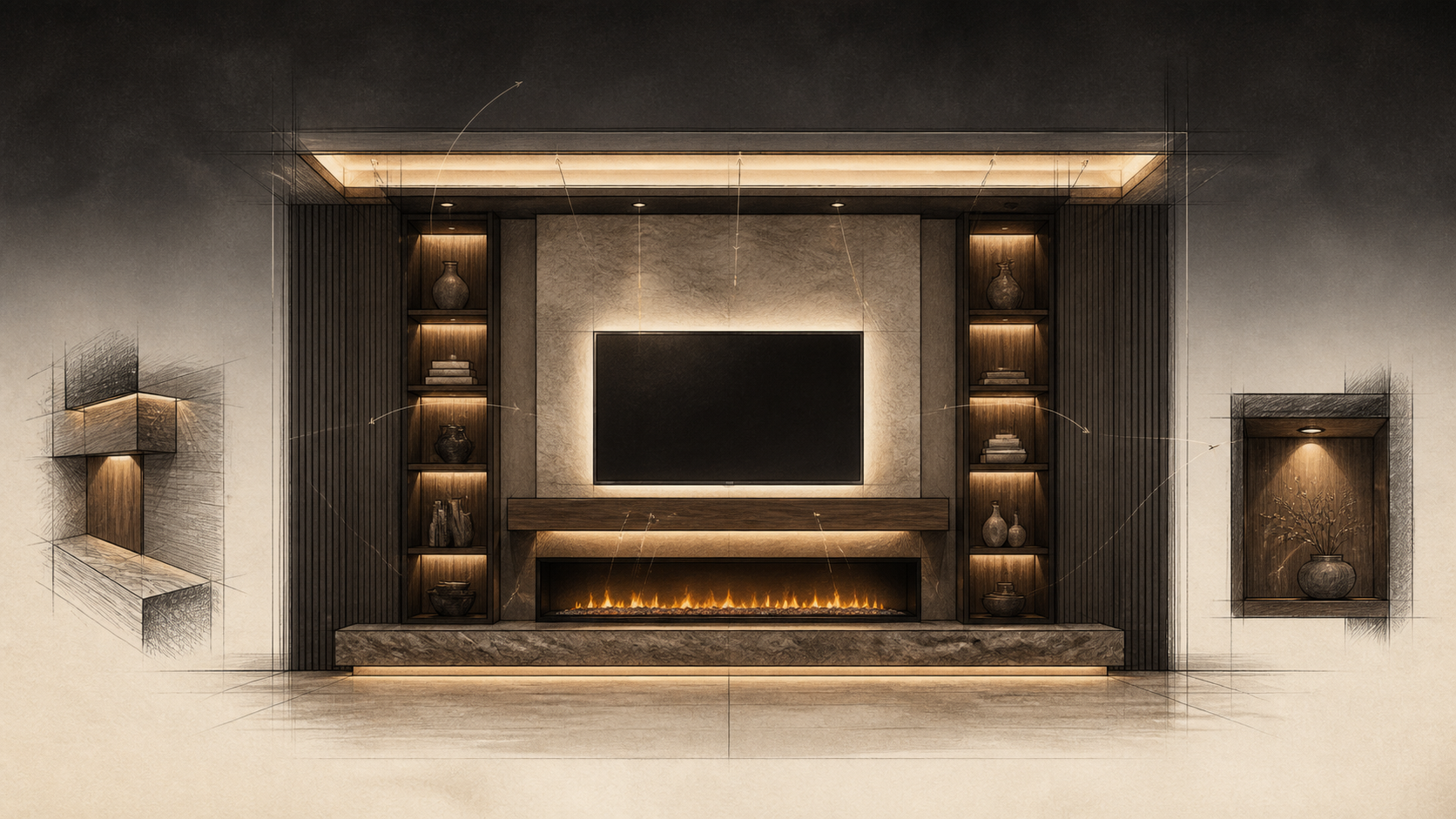
If a light does not reveal material, support viewing, illuminate an object or create useful atmosphere, it may be adding brightness without improving the design.
Choose the white light carefully
Color temperature changes how every finish is perceived
A complete TV wall lighting guide must account for Kelvin, which describes whether white light appears warmer or cooler. The right choice depends on the room, adjacent fixtures, daylight and the finish palette—not only on a number printed on the product.
Warm & Intimate
Comfortable with traditional rooms, darker woods and evening-only accent light. It can make pale finishes feel creamier.
Warm-Neutral
A versatile starting point for walnut, warm white millwork, limestone colors and many contemporary living rooms.
Clean Transition
Useful where the TV wall must bridge warm finishes and brighter ambient light without feeling distinctly cool.
Crisp & Graphic
Can suit cooler modern palettes, but may flatten warm wood or create an office-like contrast in a relaxed living space.
Test light with the real finish palette
Stone, plaster, wood and metal react differently under the same lamp
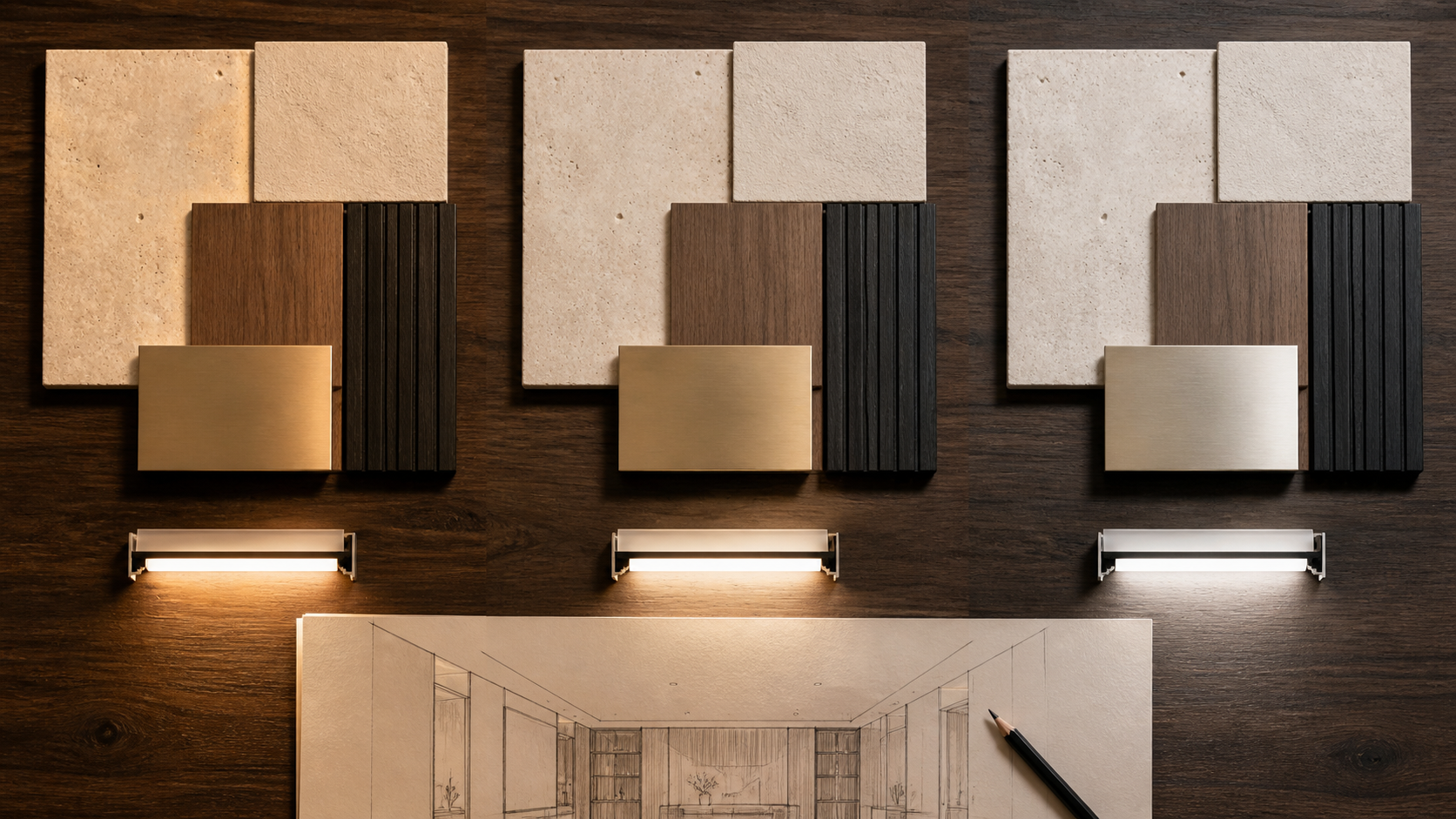
Make the comparison in the room
Review samples by day and after dark
A warm stone can look beautifully soft under one light and unexpectedly yellow under another. Dark wood may absorb a low-output accent, while brushed metal can reflect a pinpoint source more strongly than expected.
Place the actual samples together near the future wall. Test them with the proposed color temperature, dim the source through its useful range and look from the main seating position. This reveals more than comparing isolated swatches under showroom lighting.
Open the materials guideProtect the screen from glare
The best accent light is visible on the architecture, not reflected in the television
| Condition | Planning response | What to review |
|---|---|---|
| Light beside the TV | Use a concealed, diffuse source | Check the screen from the primary and secondary seats with the television both on and off. |
| Illuminated shelves | Aim light toward the object or back panel | Keep bright points out of direct sight and avoid glossy objects that mirror the source. |
| Windows opposite the wall | Coordinate daylight control | Review the room at the brightest time of day before deciding screen position and finish sheen. |
| Stone or polished panels | Prefer reflected, grazing or shielded light | Mock up the angle because textured and glossy surfaces can produce very different highlights. |
| Evening movie use | Dim accent zones independently | Create a low-output scene instead of switching every source completely off. |
A small exposed source can feel more distracting than a larger concealed glow. Diffusion, shielding, placement and dimming matter as much as output.
The detail determines the glow
Concealed profiles make integrated lighting look architectural
The technical portion of this TV wall lighting guide focuses on what the finished room should not reveal: exposed dots, bright edges, awkward wires or inaccessible components.
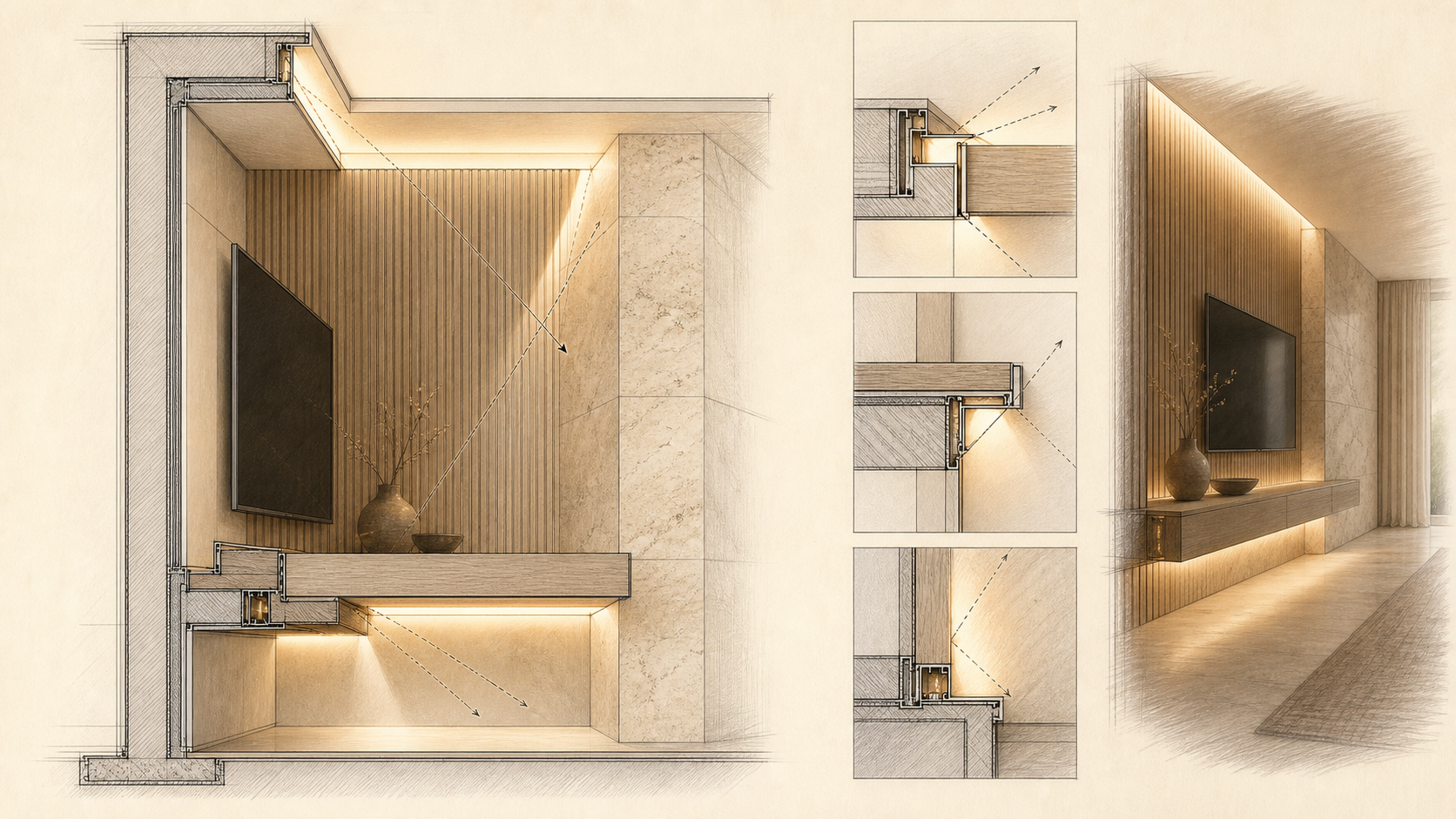
Recess the Source
Set the strip behind a lip, within a reveal or inside a profile so the eye sees reflected light instead of the emitter.
Use a Diffuser
A continuous lens softens individual points and helps the line read as one even glow across shelves and reveals.
Manage Heat & Access
Coordinate the specified channel, driver location and service path before finished panels close the cavity.
Mock Up the Angle
A short field sample confirms whether the light washes the intended surface without creating a hotspot or reflection.
Final electrical work, product selection and installation should follow the selected manufacturers’ documentation, verified field conditions and applicable project requirements.
Separate the zones
Three useful scenes are better than one overly bright setting
Everyday
Moderate shelf and wall illumination supports conversation, casual viewing and a balanced room after sunset.
Movie
Low television backlight or a restrained indirect zone gives orientation without competing with the screen.
Display
Shelves, textured stone and the floating cabinet become the focus when the television is off and the room is entertaining.
Separate dimming lets the shelf light, TV halo and architectural glow work together at different intensities. Whether the controls are simple wall dimmers or part of a broader home system, decide the zoning early so wiring and driver locations support the intended scenes. For general LED background, the U.S. Department of Energy consumer lighting guide is a useful starting resource.
Lighting planning checklist
Confirm the atmosphere before the wall is built
Use this TV wall lighting guide checklist during concept review, then verify the final products and installation details with the project team.
- Identify which surfaces should glow and which should remain quiet
- Choose the lighting zones that support the composition
- Test the finish samples under the proposed color temperature
- Compare the light during daylight and evening conditions
- Review reflections from the primary viewing position
- Confirm that LED dots and bright sources stay concealed
- Coordinate profiles, diffusers, shielding lips and recess depth
- Provide separate dimming for zones with different purposes
- Plan accessible locations for drivers and controls
- Coordinate cable paths, power and low-voltage components
- Mock up a shelf or reveal before repeating the detail
- Record the final color temperature for every visible zone
Common lighting mistakes
Avoid effects that make a custom wall feel improvised
Visible LED Dots
A shallow channel or clear line of sight exposes individual emitters. Increase concealment, diffusion or distance to the illuminated surface.
Too Many Bright Zones
When every shelf, edge and recess competes for attention, the architecture loses hierarchy. Choose a visual priority.
Mixed Whites by Accident
Uncoordinated color temperatures can make one cabinet look yellow and the next look blue. Review adjacent sources together.
No Independent Dimming
A single control forces display light, ambient light and TV backlight to share an intensity even though their roles are different.
Screen Reflections
A downlight or shelf source may appear in the television from the sofa even when it looks hidden from directly in front.
Inaccessible Components
Drivers and connections buried behind permanent finish panels make future service unnecessarily disruptive.
Homeowner questions
TV wall lighting FAQ
What Color Temperature Is Best?
Many warm contemporary rooms begin around 3000K, but the correct choice depends on the actual materials, daylight and nearby fixtures. Test the complete palette before deciding.
Should the TV Have Backlighting?
Backlighting is optional. A concealed, dimmable halo can add depth and gentle evening orientation when it supports the wall rather than outlining the screen too aggressively.
How Do You Avoid Visible LED Dots?
Use an appropriate profile and diffuser, recess the source from the viewing angle and allow enough distance for the light to blend before it reaches the visible surface.
Can Shelves and the TV Use One Dimmer?
They can, but separate controls usually provide more flexibility because display lighting and comfortable screen viewing require different intensities.
When Should Lighting Be Planned?
Use the TV wall lighting guide during the early elevation and detail package. The channels, wiring paths, drivers, access panels and control zones affect framing and millwork.
Do All Shelves Need Lighting?
No. Lighting selected shelves can create hierarchy and often looks more refined than giving every opening identical brightness.
Ready to layer the wall and the light together?
Plan the television, fireplace, materials and illumination as one composition
Share the room, preferred finishes and the atmosphere you want. We’ll organize the lighting zones around the architecture instead of adding them after the wall is designed.